How to work with your Root Chakra

Root Chakra

Root Chakra or Muladhara

You are centered – You feel strong – You ARE!

Today I’d like to ramble on about the Root Chakra and how it effects your daily life.

If you are new to dealing with Chakra Energy, it can be overwhelming when you first start because there is a lot of information to gather to help you to understand how it all works.

Here’s a basic quick run down on what a Chakra is:

A chakra is like a center of energy that swirls around and corresponds to particular nerve center of our bodies.  These are a part of our major organs as well as our emotional, spiritual and psychological make ups.  There are seven major sections you can work with but in this posting, I’m going to address just the Root Area.

I don't recall the source of this image
I don’t recall the source of this image

So now you have an idea of what the Chakra are – this is what they do. 

Everything in the world changes, moves and flows – as do our Chakra.  But sometimes these areas get blocked and like a sink drain, clog up and cause problems.  The worst scenario I can compare it to is when your plumbing gets clogged and you end up with a steaming mess to deal with (yuk!)  So now take that visual and think about your energy centers.  When a Chakra is open and flowing, so is your energy and so is your health and well being.  Now as far as how you begin working with a Chakra and getting it to flow correctly, as you travel along this life’s journey, you are going to discover many avenues to achieve this goal.  What I am going to write today may be only one way of many you could pick from – when it comes to healing the mind and body I always suggest that you learn and work with what works best with you, personally!  And as always, never replace this type of healing with regular doctor visits – stay safe and healthy in all the ways you can. 🙂

So where is your Root Chakra and tell me more about it.

This particular Chakra is often called the Base Chakra (or Root and Muladhara).  It is located between your legs (coccyx) at the base (or root) of your spine.

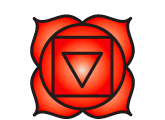
I have seen it represented in a variety of colours – Red, dark browns and blacks.  Personally? I have used all three colours when working with this Chakra to see if they resonate with my healing and each of them work for me.  But if you feel more strongly pulled to one of these colours? Please do work with them as you should listen to your inner voice.

This area is the grounding force that connects us to the Earth’s energy and helps to empower who we are. The Root Chakra helps us to deal with the tasks given to us and it gives you the ability to stand up for yourself and feel secure.  This Chakra is our sense of survival and our right to exist.  It is the rock of our on which your entire Chakra system and all the energy in your body rely upon.
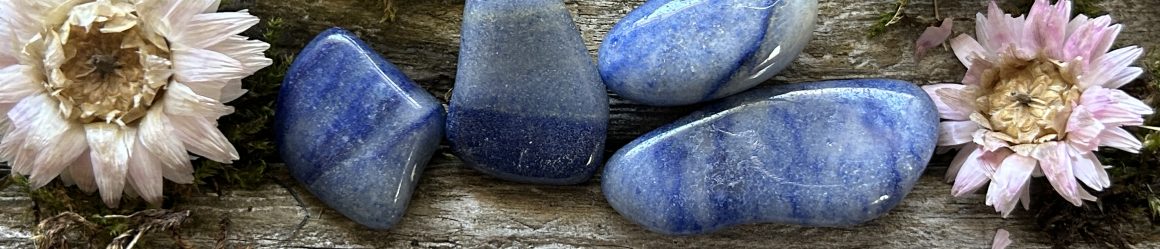
Root Chakra Healing gemstones and how to work with them
Go away – my root chakra is blocked and I don’t want to deal with any of this.. bahhhh

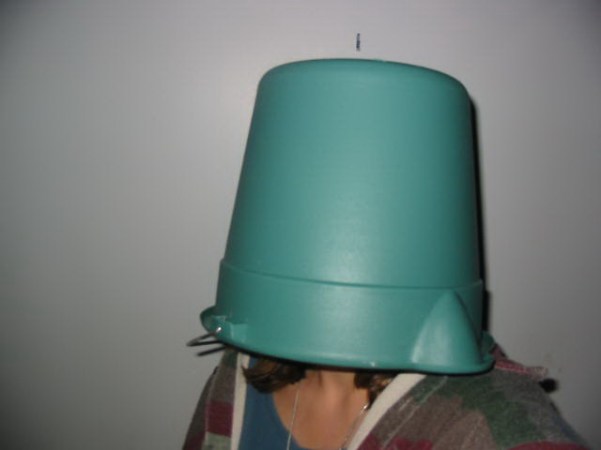
Okay, now for my personal experiences – life sometimes gives me too much to handle and I begin to feel overwhelmed and when that happens? I start feeling sad, which then turns to exhaustion, which THEN turns into something even more annoying – depression.  I start getting thoughts like: “Bahhhhhhh, I can’t deal with this.. this stinks.. I don’t want to get up and go to work.. baaahhhhhh.. I should just stay in bed, what does it matter if I go anywhere… who cares.. bah bah bah…”  Um hum, that‘s healthy!! (NOT!)  I’m a high energy person, I know how to get things done and when this mood hits me? I know I have a blockage in my emotional plumbing somewhere. (Yes that IS me in the photo up there.)

Here’s a bit more detailed info for you to gnaw on:

An imbalance in the Root Chakra can show up in many ways.

  • A chronic lack of energy with exhaustion after even a slight bit of exercise
  • Stiffness and painful movement in hips, legs, feet and lower back
  • Poor coordination
  • Lack of circulation in hands and feet
  • Depression and self esteem issues
  • Feeling a lack of security

(check! Check! CHECK!) Yes I get this a lot…

How to use the stones to work with my Chakra

Okay, check! I have my stone! Now what? If you are sitting there holding a gem going “um okay.. am I fixed yet?”, you still have some work to do.  You are going to discover that there are multitudes of ways you can use – no way is the best way and no way is the worst – you should try a few out and see what works best for you.  If you dealing with some of those symptoms, you should also look at mundane physical reasons as well and not just rely on what I’m writing here.  So here is how I work with the stones to achieve my goals and you can take this info and see if it works for you.

First, I find something to help me to find a focus point to work with this Chakra.  That’s where the gemstones come into play.    I also want to point out that for most of my clients, working with Chakra healing, balancing and opening, is not an instant fix.  You can’t just put on a piece of jewelry and expect sudden results – you use the stones with your intentions and focus of energy to achieve these goals.

Root Chakra Healing

The above photo is a very simple healing stone pendant that is made of Red Jasper.  You can find other grounding crystals by visiting Wicked Stones. 

When it comes to the Root Chakra, this involves how you are connected to the Earth itself.  You could carry a gem that corresponds to this area in your pocket or wear it as a piece of jewelry and get your hands in the earth and garden.  Pottery making and pulling weeds, also helps in it’s own way, to connect you to what is below you and keeping you solid on the ground.  As you are working, relax, breath and allow negative energy to flow from your fingertips and back to the earth below.  This helps to lower your tension levels and release some of the negative bobojees you may have inside of you stop blocking this area.

If you can, lay or sit down on the ground and use your focal stone on the area in question – if you can’t do this outside? You can meditate and relax anywhere you need to.

Even if you are at work in the office, find a quiet location and try this:

Take slow relaxing breaths and allow yourself to connect more fully to the ground below.  Visualization is an excellent tool here so begin imagining this chakra (as a spiral of energy), being clear and flowing.  Ask yourself what you need to release in order to feel better – is it stress over a job you didn’t complete? Is it bills or finances that are out of your control?  Can you find a way to understand that you can worry about these things and then allow the thoughts to move through you and be released while STILL understanding their importance, but NOT lingering on the emotional baggage they create?  If it’s important, you do not need to let go of a problem or issue but you can allow the energy to flow through you and “RELEASE” instead of clogging up in your thoughts and causing physical burdens.

This is where good meditation practices come in to play. If you work with yoga practices, try these techniques.

If you don’t feel you can meditate successfully, put on headphones and allow the soothing sounds to wash over you and help you to stop gritting your teeth and feeling the strain.  Relax in other ways that work for you, could it be exercise or jogging? Going for a walk? Every step you take, you are connected to the earth below and you CAN allow negative energy and blockages to leave you.  Allow your body to release the toxins back into the ground (where it will be washed clean by the rains) and begin to feel the strength of the earth connect to you and give you the strength to deal with what IS and what MAY come.

With this Chakra open and balanced, you have the power inside of you to be exactly who you are with strength and power.

Much light to you and thank you for reading!Root Chakra
Save

Save

Save

Save

Rock Hunting Highway 17 West, Ontario

Come join Wicked Stones on our 2007 Rock Hunting Tour of Northern Ontario

We did this rock hunting tour back in 2007, so it’s important to note that some of these locations may no longer be accessible.

We’re back!! We had the most wonderful weekend trekking about the forest north of Sault St. Marie, and I’ve decided to post some of our adventure photos.  Maybe you are travelling along this route, and you’ll find some helpful info. The pictures you are going see were taken with an old Kodak digital camera, so the quality won’t be super great, but you’ll get a good idea.

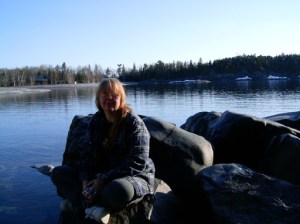
Sitting on interesting rocks at Twilight Lodge at Montreal River on Ontario

See that blurry girl in the photo there on those interestingly shaped rocks? Yes, that’s me, sitting outside of a cabin that we rented at Montreal River in Northern Ontario. An old friend of mine suggested that it would be a great place to begin our adventures as it’s a gorgeous place to stay with an amazing views. And you might get lucky and even find an agate here. Due to the water colour staining the rocks, I really couldn’t see much. It was quite early in the year, and if you look in the background of the photo, you can still see the ice and snow on the ground.

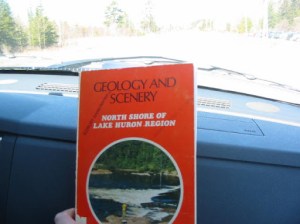
Our adventure began on Friday morning. I managed to get “just about everything” we could possibly need packed on Thursday (with a lot of effort) and into the back of the truck. One of our plans was to follow some old hints and routes from a book called Geology and Scenery. North Shore of Lake Huron Region.

Using the Geology and Scenery North Shore Of Lake Huron Region book for rock hounding

This book is part travel guide and part mineral treasure map, filled with fascinating side trips, local mineralogy and information about old mines throughout the area. It is one book in a series and is not particularly easy to find, but it is well worth tracking down.

I spent a lot of our drive west toward Sault Ste. Marie with my nose buried in its pages, reading interesting bits of information aloud as we travelled. There were so many cool things to learn about places I thought I already knew!

Many of the locations mentioned in the book are on private property. If you decide to visit any of them, please make sure you have the landowner’s permission before entering.

I found this book at the Sudbury Gem and Mineral show quite a few years back, and it’s become one of a set we never travel without now when rock hounding. 

FIRST STOP: RYDAL BANK ONTARIO

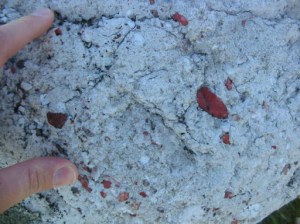
This is a small town that is about 10 km north of Bruce Mines. It’s very quaint and worth checking out. We were on the hunt for Pudding Stone. If you look around the area, you will see many homes that show off larger boulders with these beautiful red pockmarks, which are easily visible even from the road.  A bit of info on the area:  there is a prominent ridge that marks an outcropping of the Lorrain Formation, and you can find what is called “Pudding Stone”. This is a quartz jasper pebble conglomerate (or mixture).

Pudding stone found at Rydal Bank in Northern Ontario Canada

This is a really pretty rock with beautiful dashes of red. The red marks are Jasper. After a bit of chatting, we decided to drive north of Highway 17 towards the dam area. We didn’t find a lot of stones near here, but it’s worth a visit. There were only a few small pieces in the area. It was really neat to look down and find these little goodies here and there while we walked.

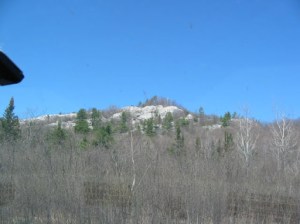
We decided to take a side trip towards a high rock formation we could see in the distance. Both of us were curious just what might be up that road.

Rydal Bank Humphry Cemetery location

You can see what we were looking at it in the picture. There is a white coloured ridge that is pretty high up on the hills.  At this time we didn’t have a car with GPS maps so we were working with a lot of paper, loose pens and empty cups of coffee.   

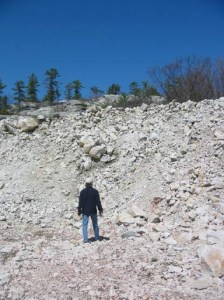
Along the way, we discovered a pretty good side road that goes to the left up towards the hill called Nethery Road. Of course, we took it (checking first to make sure that there were no private signs posted).  It was a good thing we were travelling with a 3/4 ton pick up truck, as many of the places we went would not stand up to a regular car. This road led us to Humphry Cemetery. This is a very old site, high up on the hills looking over the beautiful scenery. This is a dead-end road, and you can see the gravel pit we also visited from there. There were some beautiful old headstones but out of respect for the family members, I’m not posting any photos. Some of the dates were prior 1900s. It was a beautiful location.

Rock hunting at a Gravel Pit in Rydal Bank Ontario

The Gravel Pit – Rydal Bank Area

It was pretty quiet in the area, and no rock trucks or equipment could be found, so we felt okay about continuing the exploration of the area. We did a good check to ensure that there were no trespassing signs as well. At the bottom of this hill was a large gravel pit. We didn’t find a lot of pudding stone here, just the odd piece here and there. We poked around here for a while to see what we could find, but for the most part it was all white stones. Don’t be me – wear good shoes instead of sandals!

Back on the highway, we went, and we went on through to Sault St. Marie. We took a short side trip down Wolf Lake Road (around Batchwana Bay area) and did some exploring. It was more of a look around and not any serious rock hunting was happening. Both of us found it FAR too busy with a lot of dirt bikes and fishermen everywhere, so we turned back on the highway to go further on.

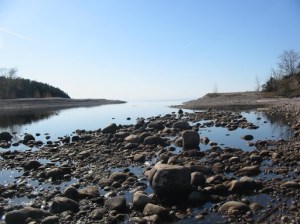
Looking for Agates at Montreal River in Norther Superior Canada

We soon arrived at our cabin near the mouth of the Montreal River. The exposed shoreline you see here is usually underwater, so do not let its peaceful appearance fool you. Water levels and flow are controlled by several dams upstream and can change unexpectedly. If you visit and decide to walk around, stay alert and listen carefully for any change in the sound of the water.

Because our trip took place in early spring, everything was wonderfully quiet and peaceful. We spent a deeply relaxing evening beside the campfire, eating pasta and watching the first stars appear in the clear, dark sky. As the fire crackled beside us, we dreamed about the adventures waiting for us the following day.

The Next Day – Mica Bay

On Saturday, we got up early to head to Mica Bay. This area has what is called the Keweenawan volcanic rock formations in it. Here’s a bit of info:  The Keweenawan are principally made up of lava flows and basaltic composition with vesicles (gas cavities) that have been filled with minerals such as agate, amethystine quartz, calcite, chlorite, datolite, epidote, prehnite, thomsite and zeolites. These are really pretty when you see them up close. When you drive past them on the highway, they look kind of reddish, and you don’t see the inclusions. When you stop to take a closer look, they are very interesting and full of neat treasures and cavities that hold things.

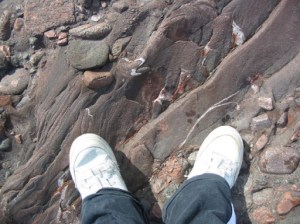
Rock formations at Mica Bay in the Keweenawan formation area in Northern Ontario Lake Superior


OH LOOK! I’m wearing real shoes this time instead of sandals!! You can see some of the calcite and quartz veins in the rock that I’m standing on in this picture.

Just a bit further down this beach, we stumbled upon a fabulous find. You will see from the next photo how far the water had receded over the winter, so there were a lot of rock treasures just waiting to be found. I was walking towards the shoreline (thinking that I had spotted a REALLY big Lake Superior Agate winking at me near the edge of the rocks). I reached down, only to have the rock I was looking at roll and crush my thumb between it and another rock! OUCH! Thanks, Universe!!

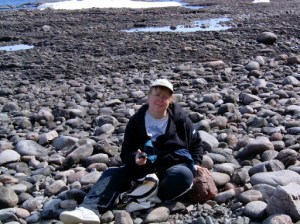
Finding Red Hematite Jasper on the shores of Lake Superior Canada

I stood up quickly to nurse a bruised thumb, only to trip and crash onto another pile of rocks right behind me. (Good shoes – always wear good shoes!) I turned around to look at what had tripped me and found myself smack dab in the middle of a pile of Hematite and Jasper! What a find! People on the highway probably heard me whooping for joy!!

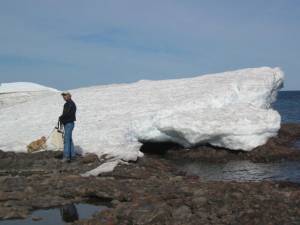
As I sat there in awe, watching the waves roll in near me (knowing that these stones were only recently hid by layers of ice and before that, many feet of water), I got to thinking of Mishi Peshu, the great underwater lynx like creature who lives in the depths of Gitchigumi (Lake Superior).  As I turned to look over my shoulder, I could see my other half looking in awe at the great ice bank still resting on the shoreline. You can see it was really quite early to be out rock hunting and very cool outside still.

Ice and snow on Lake superior in Spring on the North Shore Canada

A bit of history on this:  Mishi Peshu is the ultimate metaphor that represents the power, mystery and innate danger that comes from these sacred waters. With razor like spikes on his back, the face of a lynx or panther, and the body of a sea serpent, this creature demanded respect. The Anishinabe offered tobacco and prayer to the creature spirit before they embarked out onto the waters in their canoes. The calm waters of Lake Superior can be quickly transformed into raging squalls and huge waves from the northern, north-eastern, and north-western gales that often suddenly crop up. These gales sweep over the open water, quickly picking up momentum and causing huge waves, some up to 40 feet high. A picture of Mishi Peshu is found at Agawa Bay, Lake Superior National Park, in northern Ontario, north of Sault Ste. Marie.   If you are looking for more information on how to visit the park to see this in person? Check out this link that will take you to the Lake Superior Provincial Park site. The Midewiwin Society claimed in 1850 that this pictograph was painted by an Anishinabe shaman, and represents a heroic 4 day crossing of Lake Superior by a war party of five canoes. The author is believed to be a tribal shaman named Myeengun which means “Wolf.” The images are painted using red ochre, a pigment made from the iron ore called hematite, mixed with clay minerals. This is the most famous rock art painting in Canada, according to National Collection Archive sources.

Gargantua Provincial Park

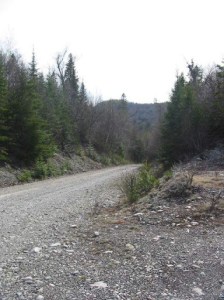
If you have the opportunity to visit this part of Lake Superior’s north shore, Gargantua is well worth the journey. When you turn off Highway 17, a warning sign announces that 14 kilometres of rough, winding, single lane road lie ahead. Take that warning seriously. The gravel road can be challenging, so drive slowly and leave yourself plenty of time. You can see what part of the road looks like in the photo below.

Gargantua is one of the main access points for the Coastal Trail system. If you plan to hike here, be prepared for one of the most physically demanding trails in the park. The route follows Lake Superior past rocky beaches, rugged shoreline and high cliffs, stretching from Agawa Bay north to Chalfant Cove.

Gargantua also has a fascinating history. Its sheltered location created a natural harbour that supported fishing and logging during the early 1900s. The community was busiest during the 1930s and 1940s, when the only way to reach it was by boat.

Driving to Gargantua Park in Northern Lake Superior Canada

Gargantua is AMAZING!!  There are miles and miles and miles of the most beautiful and well-hidden scenery on this part of the shore. It is a rough stop to get into, so there were only a few folks there when we arrived (some were set up for camping on the shore).

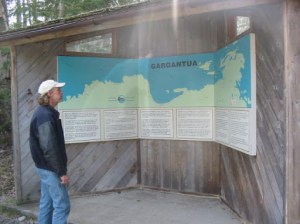
The  map of Gargantua provincial Park

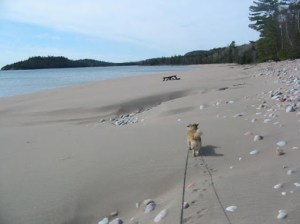
The beach is beautiful with a mixture of sand and stones.  Yes, that’s a picnic table buried under sand up there.

The Beach at Gargantua in the spring after the snow and ice moved everything around
The amazing shores of Northern Superior at Gargantua Park

The shoreline was covered with everything from tiny pebbles to enormous boulders in an incredible variety of colours, shapes and sizes. Because this area is within an Ontario provincial park, we did not collect any stones. We were more than happy to spend hours poking around, examining our discoveries and enjoying the beautiful spring afternoon.

By the time we returned to Montreal River, we were both tired, hungry and ready for a good night’s sleep. The following morning, we packed the truck and began the drive back to Sudbury. Of course, we could not resist making a few more stops along the way to search for Puddingstone near Bruce Mines and the shores of Georgian Bay. We came home with a pocketful of little samples that now have a special place in our gardens.

Did we find any Agates on this trip? Sadly, no. But we did bring home a few incredible pieces of Hematite Jasper, some beautifully rounded stones for painting and plenty of wonderful memories.

More importantly, the trip gave us a chance to step away from our busy, hectic lives and spend a few peaceful days surrounded by rugged shorelines, quiet forests and the endless beauty of Lake Superior. We may not have found the Agates we were searching for, but the adventure was absolutely worth it.

And if you love hunting and searching for rocks in the wild? You might also enjoy seeing what they look like transformed into wearable art and jewelry. I handcrafted crystal and gemstone jewelry, and some of our pieces are natural stones that are found right here in Northern Ontario. If you are interested, come have a look at Wicked Stones.

Cheers and thanks for reading! Be safe in your rockhound travels!

Save

Save